Contenido principal
2026
CSN and US Nuclear Regulatory Commission deepen strategic ties at the 38th Regulatory Information Conference

New MoU reinforces bilateral cooperation on Nuclear Safety between CSN and the NRC
Conference explores regulator mission review and organisational changes to boost efficiency
The Spanish Nuclear Safety Council took part from the 10th to the 12th of March, in the 38th edition of the Regulatory Information Conference (RIC), organised by the United States Nuclear Regulatory Commission (NRC) in Rockville, Maryland. This event is considered the largest public meeting held by the US federal agency and gathered more than 3,000 in‑person and remote participants from over 40 countries. Among them were representatives from regulatory bodies, industry, international organisations and the general public, enabling a broad and diverse exchange on current and future challenges in nuclear regulation.
The Spanish delegation was led by the CSN President, Juan Carlos Lentijo, accompanied by Commissioner Javier Dies, whose participation contributed to strengthening bilateral collaboration and updating the Spanish regulator’s position in the main regulatory debates. 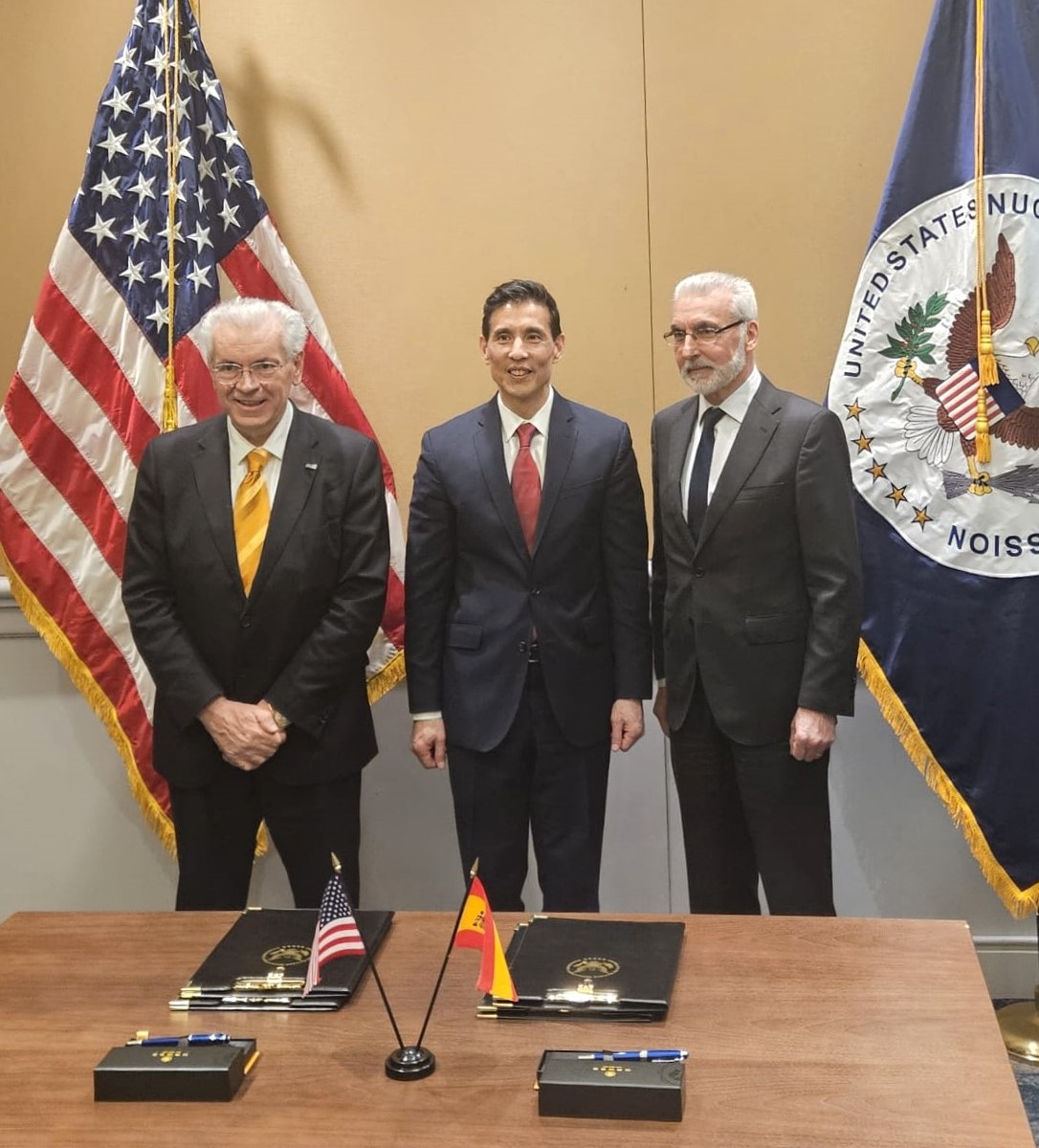
The conference was opened by the NRC Chair, Ho K. Nieh, who highlighted the modernisation of the regulatory framework, the adaptation to new technologies, and the initiatives aimed at improving and streamlining regulatory processes for the oversight of nuclear safety, with particular emphasis on licensing and certification activities for new designs and facilities. In his remarks, he stressed out the importance of a regulatory model that enables progress without compromising safety, together with the need for more agile regulatory frameworks and more efficient licensing and inspection processes. He reaffirmed the NRC’s commitment to safety as a guiding principle and to regulatory independence, in order to protect public health and the environment.
The RIC programme included technical sessions, panel discussions and presentations on the major topics shaping today’s regulatory agenda in the United States and internationally. These sessions provided a broad and up‑to‑date view of the challenges and priorities of the regulatory framework during a period of deep transformation. Debates highlighted ongoing initiatives aimed at modernising and improving the efficiency of regulatory processes and decision‑making, the evolution towards a new model of oversight and licensing, and the integration of new technologies — including artificial intelligence — into the regulatory activity.
The NRC’s contribution to the safe deployment of advanced nuclear technologies, as well as risk management and the commitment of all stakeholders to nuclear safety, formed part of the issues addressed during the conference. Furthermore, it has been discussed in more detail the organisational culture of regulators, the adaptation of licensing processes to a rapidly changing technological environment, and the knowledge‑management and human‑resources tools needed to ensure effective, consistent and publicly‑oriented oversight.
Other discussions and technical sessions focused on topics such as emergency preparedness and response, the use of Artificial Intelligence, strengthening the supply chain, new technologies applied to nuclear fuel, considerations associated with facility decommissioning, and the regulatory framework for licensing future fusion installations.
Memorandum of Understanding (MoU)
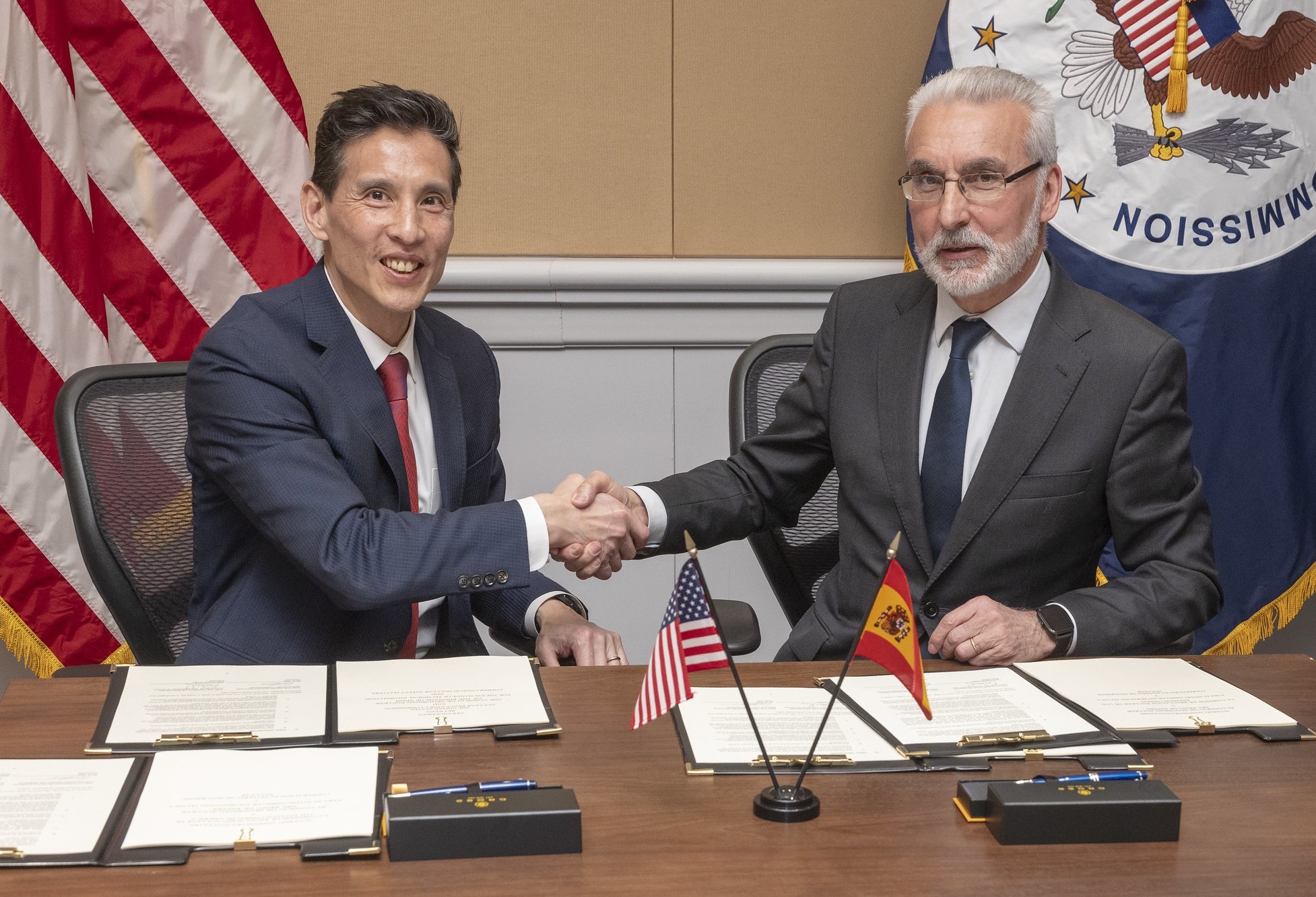
Within the framework of the RIC, the heads of both organisations, Juan Carlos Lentijo and Ho K. Nieh, signed a Memorandum of Understanding (MoU) updating the bilateral cooperation framework in place since 1974. This MoU strengthens mechanisms for the exchange of technical information, collaboration on international projects and activities, mutual support in emerging areas related to nuclear safety, and the continuation of professional mobility programmes, in view of the benefits that such cooperation offers to both organisations.
This MoU reaffirms the joint commitment of both regulators to advancing key areas of nuclear safety and radiation protection, and consolidates a historic cooperation that remains strategic for the CSN in the current global context of technological innovation and expansion in the nuclear sector.
In addition, the Spanish delegation held a meeting with NRC Commissioners Matthew J. Marzano and Douglas W. Weaver, who expressed their interest in the CSN’s national and international activities and in the situation in Spain regarding nuclear safety. The delegation also exchanged views with other representatives from the NRC and from peer regulators and international organisations. 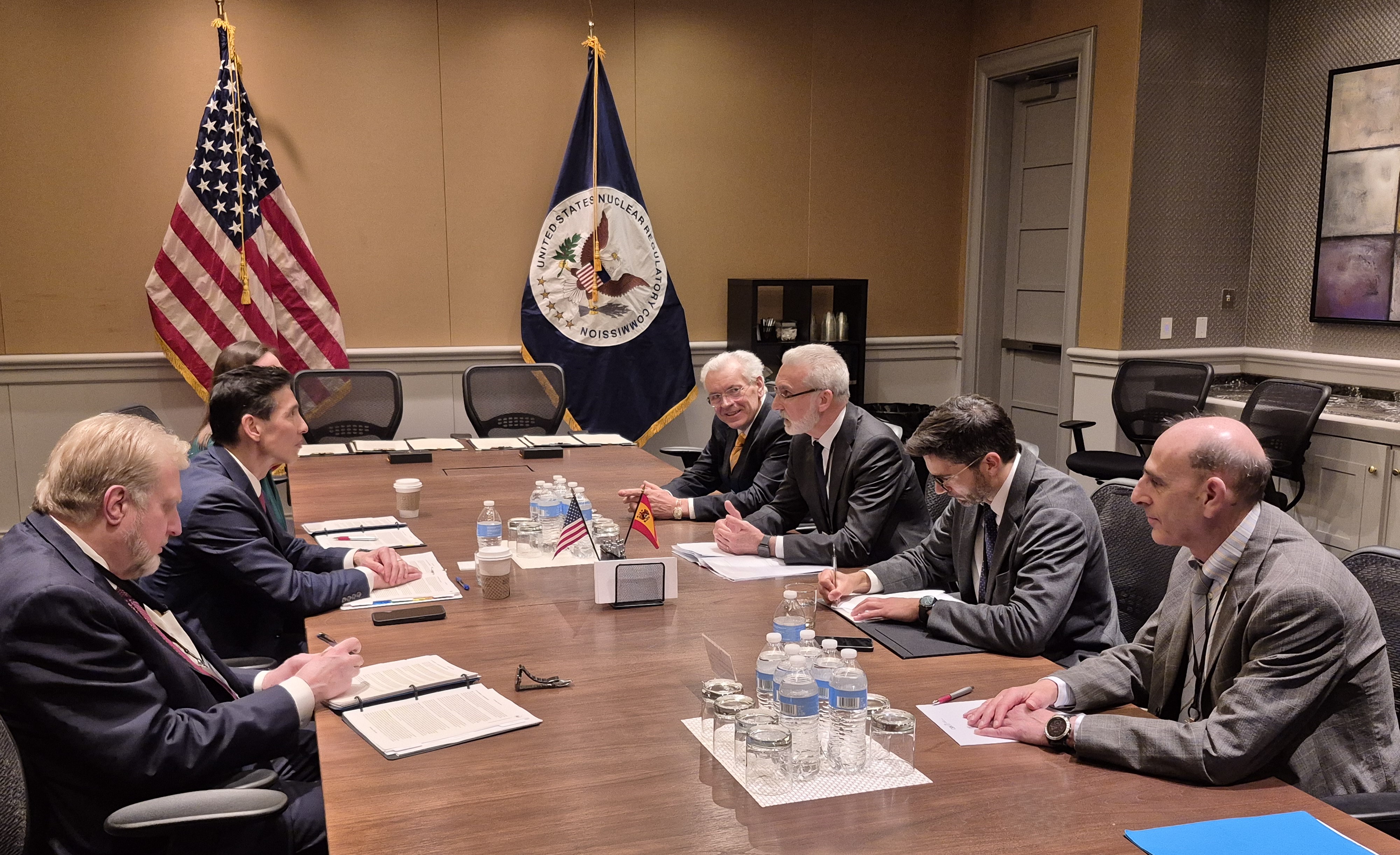
International Strategy
The CSN’s presence at such forums is part of its international activity, which constitutes one of the institution’s strengths and fosters the exchange of experience with regulatory bodies, international organisations and industry representatives. On the one hand, it enables the CSN to continuously update and expand its knowledge and working practices. On the other hand, it strengthens cooperation with its counterparts in other countries.
These actions are set out in the regulator’s International Relations Strategy, which addresses the four strategic objectives that guide its international activities in line with its statutory functions. These objectives are the promotion of international engagement, the external representation of the CSN, relations with peer regulators, and the returns generated by its international activities — all with the aim of maintaining the highest standards in nuclear safety and radiation protection.